Gardening with kids isn’t just about digging in the dirt; it’s a passport to adventure and discovery. Imagine tiny hands planting seeds that will sprout into vegetables, flowers, or even a backyard jungle. It’s a chance for kids to unleash their inner scientists while getting a taste of the great outdoors. Plus, who knew that dirt could be so much fun?
But let’s face it—gardening isn’t all sunshine and rainbows. There’ll be mud fights, rogue worms, and the occasional tantrum when a favorite plant doesn’t sprout. Yet, these hilarious moments make for unforgettable memories. So grab those tiny shovels and aprons, because gardening with kids is the perfect way to cultivate not just plants, but also creativity, responsibility, and a whole lot of laughter. Who knew growing a garden could be this much fun?
Benefits Of Gardening With Kids
Gardening with kids offers numerous advantages that enrich both their development and the gardening experience. Engaging in this activity fosters essential life skills.
Enhancing Learning Experiences
Gardening serves as a hands-on educational tool. Children learn about plant life cycles, from seed germination to fruit production. Exploring different plants sparks curiosity about biology and ecology. Measuring growth teaches math concepts, while observing insects encourages scientific inquiry. Storytelling can deepen understanding, as sharing legends or fun facts about plants makes lessons memorable. Engaging in gardening promotes teamwork and communication skills as children work together.
Promoting Healthy Habits
Gardening encourages kids to adopt healthier eating patterns. Direct involvement with growing vegetables leads to increased consumption of fresh produce. Physical activity benefits overall health, enhancing strength and coordination. Exposure to sunlight contributes to vitamin D levels, supporting bone health. Garden activities cultivate responsibility, as children learn to care for plants. Connecting with nature reduces stress and boosts mood, enhancing mental well-being. Encouraging this engagement invites a positive outdoor lifestyle.
Getting Started With Gardening
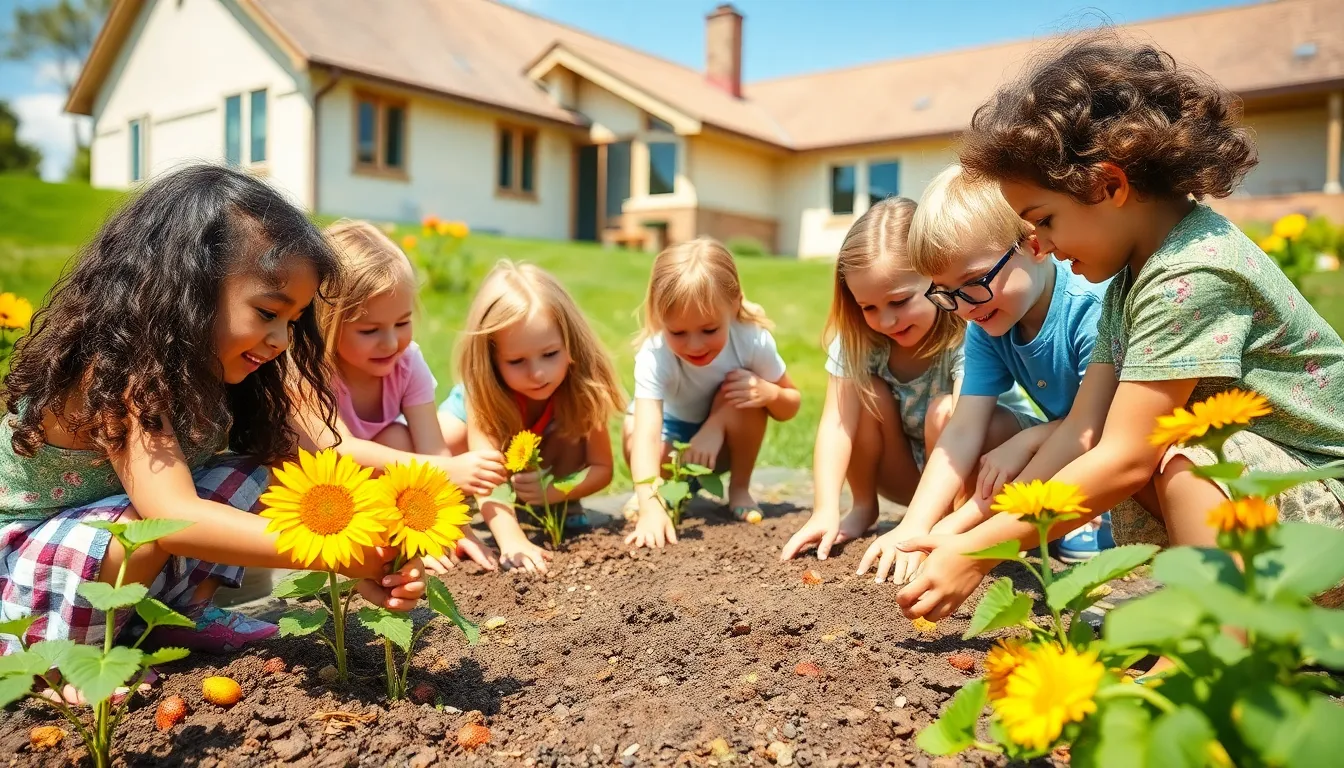

Starting a garden with kids involves planning and thoughtful choices. Key aspects include selecting a suitable location and picking the right plants for young gardeners.
Choosing The Right Location
Consider sunlight exposure when selecting a spot for the garden. A location with at least six hours of sunlight each day supports healthy plant growth. Drainage plays a crucial role; avoid areas that retain excessive water. Accessible spaces enable children to participate actively, fostering engagement. Safety is essential; choose a place free from hazards like sharp tools or garden chemicals. Lastly, proximity to the house encourages regular interaction and monitoring.
Selecting Kid-Friendly Plants
Opt for plants that are easy to grow and maintain. Fast-growing options, such as radishes and sunflowers, excite children by showing quick results. Choose plants with vibrant colors; they attract attention and spark curiosity. Edible plants like strawberries or cherry tomatoes promote healthy eating habits. Easy-to-handle seeds like beans encourage children to learn planting techniques. Focusing on resilient plants ensures fewer frustrations during the gardening experience.
Tools And Supplies For Kids
Equipping kids for gardening involves selecting appropriate tools and safety gear. Keeping children engaged and motivated depends on accessibility to the right supplies.
Essential Gardening Tools
Gardening tools for kids include small shovels, trowels, and rakes designed for little hands. Colorful watering cans make hydration fun while promoting responsibility. Children also benefit from gloves sized for their hands, which protect them from dirt and sharp objects. A sturdy wheelbarrow allows them to move soil and plants with ease. Providing tools that fit their size can enhance their confidence and enjoyment of the gardening experience.
Safety Considerations
Safety methods ensure a fun gardening session. Always supervise children, especially when using sharp tools. Explain the importance of wearing gloves to avoid skin irritations. Encourage kids to wear hats and sunscreen to protect against sun exposure. Keeping first-aid supplies handy addresses minor injuries swiftly. Teaching children to handle tools responsibly fosters a greater understanding of safety in the garden.
Fun Gardening Activities
Gardening with kids offers numerous engaging activities that spark creativity and interest in nature. These activities encourage exploration and learning through hands-on experiences.
Hands-On Projects
Planting seeds provides a great starting point. Kids can decorate seed packets, learning about plant types in the process. Building small planters creates opportunities for design and construction skills. Making garden signs for plants reinforces reading and writing skills. Creating a mini compost bin teaches the importance of recycling and sustainability. A scavenger hunt featuring specific plants or insects enhances observation skills. Each project promotes teamwork and creativity while making the gardening experience memorable.
Seasonal Gardening Ideas
Spring is perfect for planting quick-growing vegetables like radishes and lettuce. In summer, kids can enjoy caring for flowering plants such as sunflowers and marigolds. Fall brings the excitement of harvesting pumpkins or apples, perfect for seasonal crafts and recipes. Winter gardening can include indoor herb gardening, teaching patience as kids watch their plants thrive. Each season introduces new activities and lessons, keeping gardening fresh and exciting throughout the year.
Encouraging Responsibility And Teamwork
Gardening with kids offers numerous opportunities to instill responsibility and foster teamwork. Engaging them in gardening tasks builds a sense of ownership and collaboration.
Assigning Tasks
Assigning specific tasks encourages children to take responsibility for their gardening roles. For example, one child can plant seeds while another waters the plants. Giving kids age-appropriate duties builds confidence and skill sets. Responsibilities can rotate, allowing everyone to experience various aspects of gardening. This shared involvement enhances communication, making the experience more enjoyable and educational.
Celebrating Successes
Celebrating successes reinforces positive behaviors and achievements in gardening. Gather the family to admire healthy plants or a bountiful harvest. Highlighting milestones fosters a sense of pride and accomplishment. Consider creating a celebration ritual, like a small garden party featuring freshly picked produce. Acknowledging progress, no matter how small, cultivates motivation and enthusiasm for future gardening endeavors.